The Speed Of Change
The Speed Of Change
The pace of change in AI has accelerated dramatically.
Every other day brings a new announcement from OpenAI, Google, or Anthropic.
Or a new video-generating AI with a funny name like Nano Banana that captures everyone’s attention.
This acceleration isn’t just perception. Something fundamental has changed.
First, we are in an unprecedented revolution. There have been other revolutions before this one, but none like it.
There was the Industrial Revolution that moved populations from farms to factories, from agrarian life to urban industrial economy. It took massive capital to build factories, relocate workers, and train entire workforces. This revolution unfolded over decades.
Then came the Digital Revolution, where computers became affordable enough for office workers to leverage computing power in their daily tasks. This created entirely new industries: chip manufacturing, hardware production, and the software that powered it all.
Now we’re in the AI revolution, and this one is fundamentally different. In the Industrial and Digital eras, it took brilliant people to imagine and build transformative technologies. But the machines themselves weren’t creating new machines. Computers weren’t designing better computers by themselves.
Today, the very thing driving the revolution is improving itself. Human ingenuity still drives AI development, but we’re approaching the tipping point where AI systems begin improving themselves. This self-improvement loop is what makes the AI revolution categorically different from everything that came before.
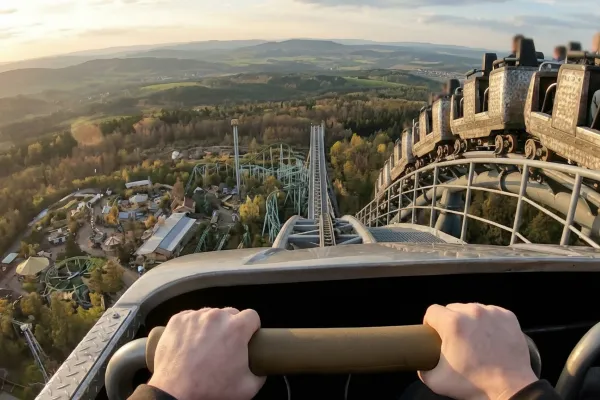
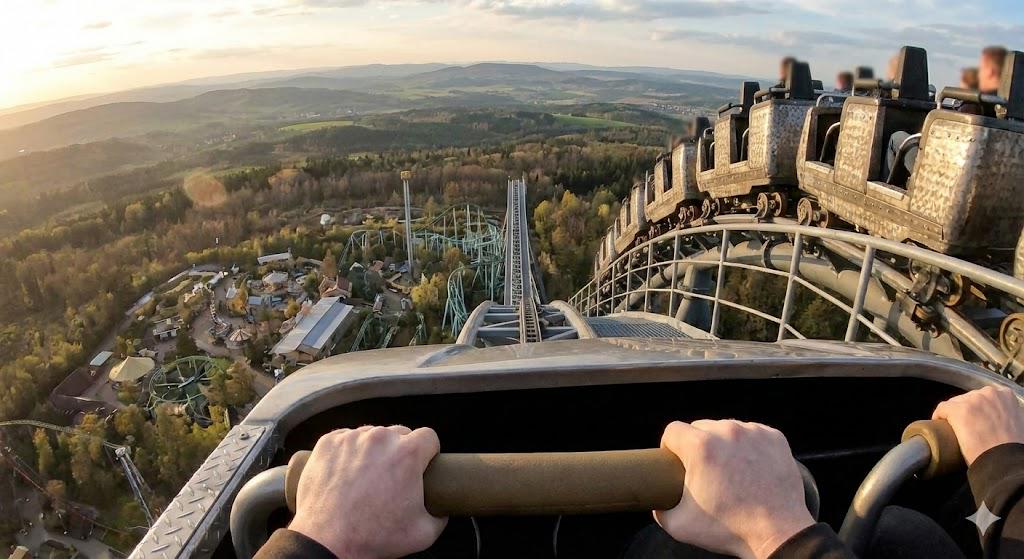
Think of it like a roller coaster.
You’ve moved through the queue, stepped into the car, pulled the safety bar down, and lurched out of the station to begin the first big climb—ratchet, ratchet, ratchet—higher and higher. Then a pause at the peak as you inch toward the precipice. As the first car tips past the point of no return, each car pulls the next faster and faster until everyone’s in freefall. Some scream in fear, others in excitement. Some just close their eyes and hang on.
That climb represents the development of AI so far—the hard-won progress from early machine learning to systems that now create text, images, video, code, and increasingly, more capable AI systems.
We are at the top of the hill on that roller coaster—that moment before the drop. Every major AI lab is racing to be in the first car because when someone achieves true Artificial General Intelligence (AGI), many believe the path to Artificial Super Intelligence (ASI) could be remarkably short—a defining moment in human history.
What happens when AI surpasses human intelligence remains genuinely uncertain. But there’s widespread agreement among AI researchers that the transition could be rapid. AI systems don’t sleep, can access vast information instantaneously, and could coordinate at scales impossible for humans. Once an AI system becomes more capable than we are at improving AI itself, the timeline for subsequent advances becomes very difficult to predict.
But even before that precipice, right now, as we inch toward the drop, the pace of change is accelerating noticeably.
What does this mean for us today? How does it impact our personal and professional lives?
Stick with me as we explore not just what AI means for business and life, but how to make informed decisions as the ride accelerates. Because whether we’re screaming in excitement or gripping the safety bar, we’re all on this coaster together.
